As a leading specialized equipment logistics broker, Next Exit Logistics contracts with trucking carriers to plan and execute complex, cross-country transport of heavy machinery, like excavators and skid steers, for our clients. Shipping equipment across the country presents unique challenges, so in this article, we break down the key factors involved in skid steer and excavator transport—from securing the load and understanding federal regulations to choosing the right carrier and trailer for a safe, compliant, and on-time delivery. This information is designed to educate our target audience: construction company owners, heavy equipment rental businesses, logistics practitioners, agricultural operations, and those engaged in buying and selling equipment.
The Complexities of Heavy Equipment Hauling
Heavy construction equipment transport is more than just moving giant machinery from point A to point B. It requires a specialized approach to ensure the safety of those on the road and the valuable equipment. Here are some factors that make skid steer and excavator transport especially complex:
- Excavators, skid steers, and other construction equipment are oversized and bulky, requiring the right trailer for the right job.
- Loading and unloading heavy equipment like skid steers requires specialized ramps, lifting equipment, as well as trained operators to safely load the machinery onto the trailer, secure it with multiple tie-downs to prevent shifting, and carefully unload it at the destination.
- Oversized equipment shipping is regulated differently from regular trucking. Depending on the size of the equipment, carriers may need to get special permits for skid steer and excavator hauling.
How to Transport Excavators & Skid Steers: Essential Steps
When a trucking carrier is contracted to transport heavy equipment like an excavator, their preparation is a meticulous, multi-step process focused entirely on safety and compliance.
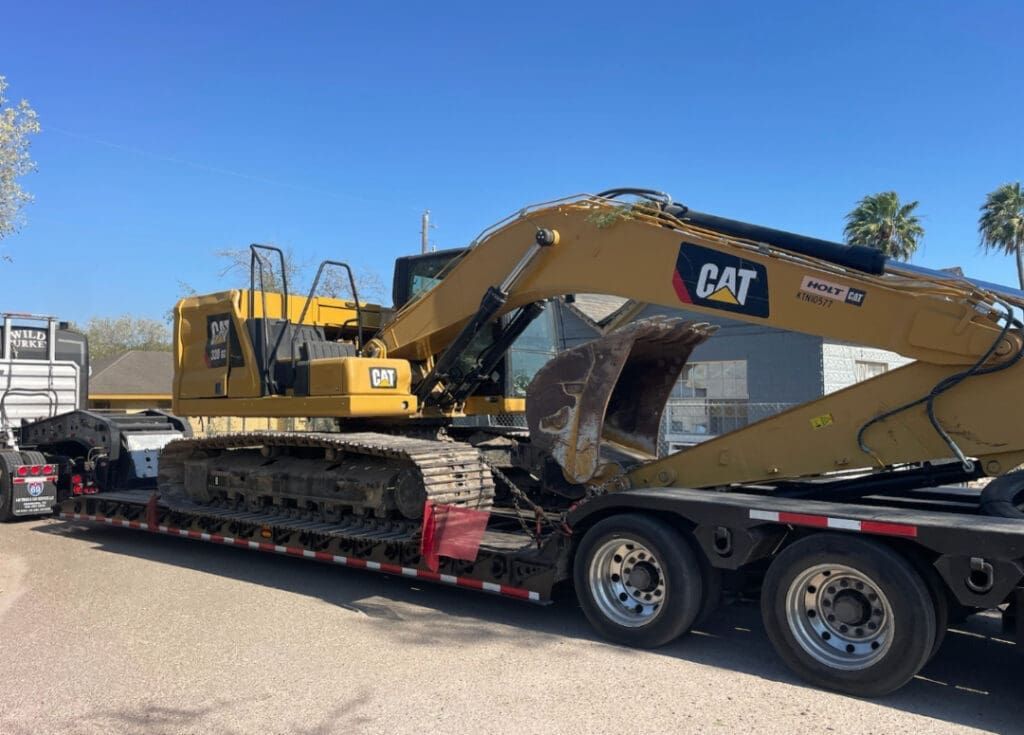
Once on-site, a trained operator carefully loads the excavator onto the trailer, using sturdy ramps and a spotter to guide the machine and maintain its balance as the center of gravity shifts. After the excavator is correctly positioned on the trailer, the team secures all moving parts—lowering the boom, bucket, and any other attachments—and locks the cab and engine covers.
The final, and most critical, step is to use a sufficient number of heavy-duty chains and binders to secure the equipment to the trailer frame, applying tension at multiple points to prevent any lateral, forward, or backward movement during transit. This preparation ensures the machine is stable and ready for a safe journey, protecting not only the valuable machinery but also everyone else on the road.
Choosing the Right Trailer for Shipping Excavators and Skid Steers
It takes the right transport equipment to safely move excavators and skid steers throughout the U.S., and matching the flatbed trailer type to the precise measurement of each piece of individual equipment takes knowledge, expertise, and experience. Here is an overview of some of the flatbed truck/trailering options that can work for the transport of heavy construction equipment:
- Step Deck: Features a lower deck height compared to standard flatbeds to accommodate taller cargo
- Double Drop Deck/Lowboy: Has two drops in deck height to accommodate tall loads that need to be closer to the ground for stability and clearance
- Stretch Double Drop: Extra length and drop sections for very long or heavy items
- Removable Gooseneck (RGN): The front gooseneck becomes a ramp for easy loading and unloading of oversized equipment
Permitting and Regulations for Shipping Equipment Across the Country
The transportation of heavy construction equipment on state and federal highways is governed by a complex set of regulations from the Department of Transportation (DOT) and the Federal Motor Carrier Safety Administration (FMCSA). These agencies set baseline standards for legal dimensions and weights, which are generally 80,000 lbs gross vehicle weight, 8 feet 6 inches in width, and 13 feet 6 inches in height. When a load exceeds these limits, it is considered oversized or overweight and requires special permits from each state it will travel through.
State-specific size and weight regulations, which can be more stringent than federal guidelines, dictate the need for pilot cars or escort vehicles and specify signage requirements like “Oversize Load” banners and red flags. They also impose strict rules on travel times, often limiting the movement of oversized loads to daylight hours and prohibiting travel during holidays or peak city traffic. Non-compliance can lead to significant fines, delays, and a suspension of operating licenses.
It is therefore crucial that the trucking carrier understands and complies with every federal and state requirement for transporting oversized loads on the route they will take, and that they obtain all the necessary permits before the journey begins. At Next Exit Logistics, we screen for carriers who are experienced in heavy equipment transport and are well-equipped to handle these challenges.
Securement: Preventing Shifting During Transit
For a trucking carrier, cargo securement is a non-negotiable aspect of transporting heavy equipment, governed by a strict set of regulations from the Department of Transportation (DOT) and the Federal Motor Carrier Safety Administration (FMCSA) to prevent shifting or falling loads. These rules specify the minimum number of tie-downs required based on the equipment’s weight and length. Moreover, specific rules apply to the securement of attachments, the use of chocks or blocks to prevent rolling, and the protection of tiedowns from abrasion.
It is critical that the carrier not only understands but also meticulously follows both federal and state requirements for cargo securement on every route. At Next Exit Logistics, we take this responsibility seriously. We screen our carrier partners to ensure they possess a proven track record and extensive experience in heavy equipment transport, and that they are well-equipped to handle the complexities of these regulations.
Cost Factors: How Much to Ship an Excavator or Skid Steer?
The price of heavy haul shipping is a complex calculation based on several key factors. First and foremost are the dimensions and weight of the load, as oversized or overweight cargo requires specialized trailers, additional permits for each state of travel, and escort vehicles, all of which increase costs. The distance and specific route are also critical, with longer journeys, challenging terrain, and routes requiring detours (to avoid low bridges or tight turns). Finally, market conditions like fluctuating fuel prices, seasonal demand, and the availability of specialized equipment and drivers all play a role in determining the final cost.
At Next Exit Logistics, we understand that these variables can make pricing seem daunting, which is why we screen our carrier partners. We only select carriers that pass our stringent requirements, ensuring they have adequate insurance coverage for your valuable cargo and employ experienced drivers with proven track records. This dedication allows us to provide reliable service and peace of mind. For an accurate and customized quote on your next heavy-haul shipment, contact us today.
Frequently Asked Questions
What are the main steps involved in excavator transportation?
Transporting an excavator involves several critical steps to ensure a safe and successful journey. The first step in this process is selecting a freight broker who works with top-rated carriers that pass rigorous standards for carrier selection.
We will determine the right transport vehicle for the job, which is selected based on the excavator’s dimensions and weight. General steps include careful loading, which requires parking on level ground, using sturdy ramps, and driving the excavator onto the trailer slowly with its heaviest end first. Finally, the excavator must be properly secured by lowering all attachments, locking doors and covers, and using a sufficient number of tie-downs and chocks to prevent movement during transit.
What type of trailer is needed for shipping excavators and skid steers?
Choosing the right trailer is a crucial decision, based on all measurements, dimensions, weight, and ground clearance. The most commonly used trailers include lowboys and RGNs for excavators, and tilt deck or flatbeds for skid steers.
What permits are required for excavator shipping across state lines?
Shipping an excavator across state lines often requires obtaining multiple permits, as each state has its own specific regulations for oversized and overweight loads. A carrier must secure permits for every state the shipment will pass through if the excavator exceeds standard legal limits (typically 8 feet 6 inches wide, 13 feet 6 inches high, and 80,000 lbs gross weight). These permits are not “one size fits all” and may dictate specific travel times, approved routes, and the need for escort vehicles, pilot cars, and sometimes law enforcement to ensure the safe and legal transport of the equipment.
How can I get an accurate quote for how much to ship a skid steer?
To get an accurate quote for shipping a skid steer, you must provide specific details about the machine and the transport. The most important factors are the skid steer’s exact dimensions (length, width, height), weight, and the precise pickup and delivery locations.
What are the safety considerations for shipping equipment across the country?
Shipping equipment across the country requires careful planning to ensure safety and prevent damage. This includes properly preparing the equipment by securing all moving parts as well as complying with all federal and state regulations for considerations like oversized loads and cargo securement. Next Exit Logistics screens carriers to ensure they have experience with the challenges of safely transporting heavy or specialized machinery.
We’re Logistical Experts in Moving Specialized Equipment
Next Exit Logistics is a premier freight broker in North America, with specialized expertise and experience in hauling oversized equipment like excavators and skid steers. When you contract with us, you gain access to a vast network of vetted carriers known for their skill in transporting specialized equipment.
At Next Exit Logistics, we live by our core values, which include proactive communication, being solution-driven, maintaining precise execution of all facets of the transit process, and priding ourselves on maintaining energized excellence. Since our inception in 2008, independently owned Next Exit Logistics has been dedicated to meeting your urgent transportation needs. And we’re committed to delivering on our promise of flexibility and exceptional customer service. Our dedicated team is on hand to provide exceptional service, ensuring your freight is delivered with precision and efficiency.
When you’re ready to move specialized heavy equipment over the road, such as excavators and skid steers, we urge you to contact the service professionals at Next Exit Logistics for a quote. Contact us today and speak to one of our logistics experts to learn more about our specialized freight services and heavy equipment hauling expertise.